
THE MIDLIFE BRAIN
Menopause can change how your brain feels—without changing what you know or what you are capable of.
Institute FLE translates emerging brain science into practical strategies that help women understand cognitive symptoms, support their brain health, and adapt how they work and lead through midlife.
By bringing together women, researchers, clinicians, and workplace leaders, we move beyond awareness toward better workplace practices and research priorities grounded in women’s real experiences.
The Midlife Brain Deserves More Attention
Menopause is often discussed through hormones and physical symptoms. But the brain is an essential part of the transition, with implications for cognition, sleep, mood, energy, and how women experience midlife at work.
At the height of their careers and caregiving responsibilities, many women begin noticing changes:
● Sleep becomes unpredictable.
● Mental clarity comes and goes.
● Concentration becomes more difficult.
● Familiar workloads feel harder to manage.
● Stress feels more difficult to regulate.
● Energy rises and falls without warning.
At the same time, women are expected to keep performing, caring, deciding, and leading.
These symptoms can be unsettling, especially when women do not understand where they are coming from and begin to question their abilities.
Brain fog is a symptom—not a measure of competence.
During menopause, the brain responds to a changing hormonal environment. Women are not losing their knowledge, judgment, or experience. They may need better information, different strategies, appropriate clinical support, and workplaces that understand what is happening.
HOW WE WORK
We explore. We convene. We translate.
We Explore
We examine how menopause-related changes in sleep, cognition, mood, stress, and energy can affect women’s health, leadership, and experience at work.
We Convene
We bring together researchers, clinicians, workplace leaders, advocates, and women with lived experience to advance the conversation about the midlife brain.
We Translate
We make emerging knowledge understandable, relevant, and useful—and connect it with the questions women and workplaces are asking.
Ways we move the conversation forward.
WHAT WE DO
Events and Expert Conversations

We create opportunities to learn directly from researchers, clinicians, workplace leaders, and women with lived experience.
Through symposiums, masterclasses, and expert conversations, we explore the relationship between menopause and:
Brain health • Sleep • Cognition • Stress • Energy • Leadership • Work
Research Translation

We make emerging research about menopause and the midlife brain understandable and relevant.
We connect scientific knowledge with the questions women are asking about their health, abilities, careers, and future—and identify where important questions remain unanswered.
Convening Different Perspectives

We bring together people who often approach menopause from separate perspectives.
Researchers bring scientific knowledge. Clinicians bring experience caring for women. Employers bring an understanding of workplace realities. Women bring the lived experience of navigating the transition.
Bringing these perspectives together helps surface gaps in knowledge, unmet workplace needs, and priorities for future research.
Listening to Women

Women’s experiences are an essential source of insight.
Through conversations, surveys, event discussions, and audience questions, we learn what women are experiencing, what they do not yet understand, and what kinds of support are missing.
These insights inform our educational work, research questions, and future workplace initiatives.
THE LEAD FRAMEWORK
Learn. Energize. Adapt. Deepen.
Menopause can affect several areas of life at once, making it difficult to know where to begin.
The LEAD Framework is Institute FLE’s brain-informed approach to translating knowledge into action. It brings together research from menopause, brain health, behavioral science, and cognitive ergonomics.
L - Learn
Understand how changing hormones can affect the brain, sleep, mood, energy, and cognition.
Knowledge helps women recognize common symptoms without mistaking them for lost competence.
E - Energize
Support the foundations of brain health through sleep, movement, nutrition, stress regulation, social connection, and appropriate clinical care.
A - Adapt
Reduce unnecessary cognitive load by reconsidering interruptions, task switching, workload intensity, focused work, and how responsibilities are structured.
Sometimes the problem is not your brain. It is the amount your brain is being asked to carry.
D - Deepen
Strengthen the relationships, purpose, identity, and self-trust that support women through periods of change.
Midlife is not only a time to manage symptoms. It can also be a time to reconsider how women want to live, work, and lead.
The LEAD Framework is an educational framework, not a clinical protocol, and does not replace individualized medical care.
FEATURED EVENT
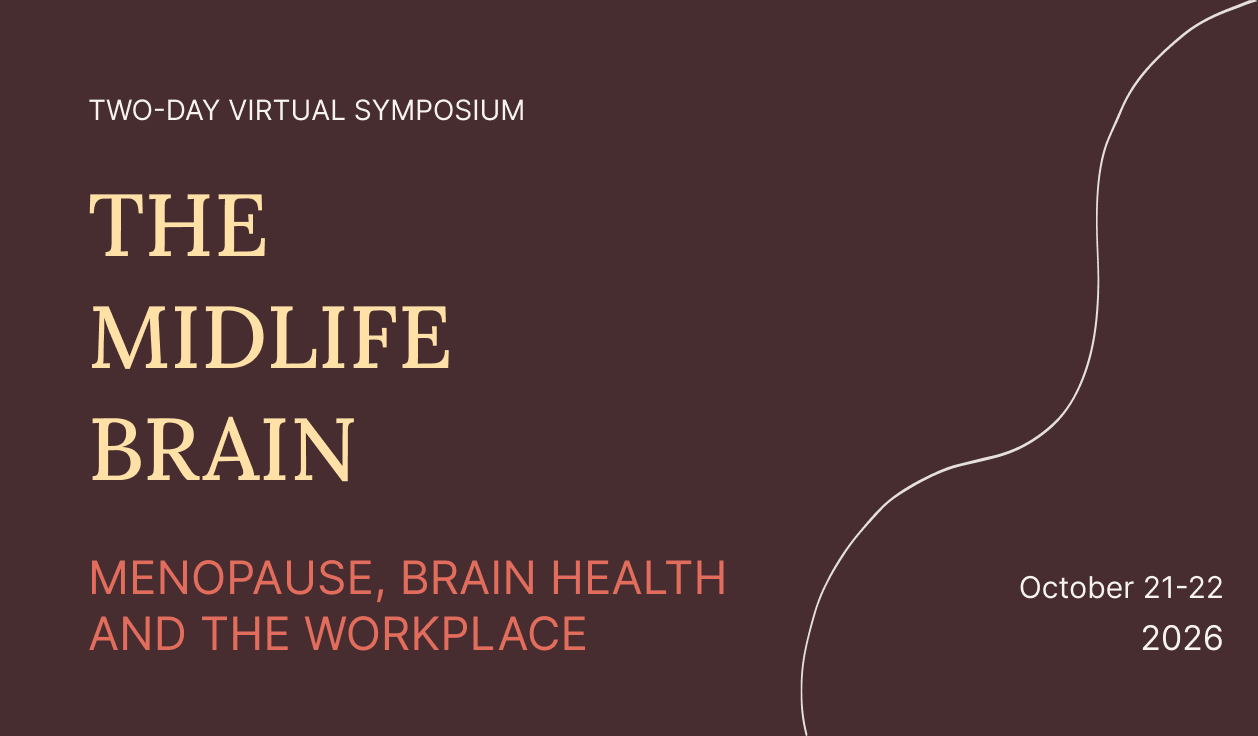
A two-day virtual symposium bringing together science, lived experience, and the realities of work.
Researchers, clinicians, workplace leaders, advocates, and women in midlife will explore what current evidence tells us about the female midlife brain—and what this means for women’s health, work, and leadership.
Where your perspective fits in
WHO OUR WORK IS FOR
Women in Midlife
For women who want to understand how menopause can affect the brain, sleep, mood, energy, and experience at work—without interpreting symptoms as lost competence.
Researchers and Clinicians
For experts who want to bring emerging knowledge into conversation with women’s lived experiences and the realities of leadership and work.
Employers and Workplace Leaders
For organizations that want to better understand the relationship between menopause, brain health, workplace experience, and the retention of experienced women.
Advocates and Women’s Organizations
For leaders working to advance women’s health, workplace equity, research, education, and public understanding of menopause.
Women’s experiences are essential to understanding the menopause transition.
COMMUNITY AND LIVED EXPERIENCES
Our community creates opportunities for women to learn, exchange perspectives, identify what support is missing, and contribute to a broader conversation about brain health and work.
Community is not separate from our research translation and education. It helps us understand how emerging knowledge is experienced in real life—and where new research and workplace solutions are needed.
MEET THE FOUNDER
Emily Serebryany

Emily Serebryany is an entrepreneur, women’s health advocate, angel investor, board member, and founder of Institute FLE.
Before founding Institute FLE, Emily built and led a healthcare staffing company with more than 2,000 employees before its acquisition. This gave her a firsthand understanding of leadership, organizational pressure, and the importance of retaining experienced talent.
While leading through midlife, Emily experienced brain fog and burnout without understanding what was happening. Like many accomplished women, she began questioning abilities that had helped her build and lead a successful company.
Only later did she learn that changes in memory, concentration, sleep, and energy can be connected to the menopause transition. She founded Institute FLE after recognizing a larger gap: emerging knowledge about the midlife brain was not reaching women or informing workplace conversations.
Today, Emily brings together researchers, clinicians, women, and workplace leaders to translate emerging science into practical strategies and advance a more informed understanding of women’s brain health, leadership, and work.
FREQUENTLY ASKED QUESTIONS
-
No. Institute FLE provides education, research translation, and practical frameworks. We do not diagnose or treat medical conditions. We encourage women to consult qualified healthcare professionals for individualized medical care.
-
No. Our work is relevant to women in perimenopause, menopause, and postmenopause, as well as women who want to understand and prepare for the transition.
-
We focus on the intersection of menopause, brain health, leadership, and work. We connect emerging science with women’s lived experiences and translate it into knowledge that women and workplaces can use.
-
Women are at the center of our work, but meaningful change also requires informed employers, healthcare professionals, researchers, advocates, and workplace leaders.
-
Institute FLE gathers insights through surveys, conversations, events, and partnerships. We identify questions requiring greater investigation and translate existing and emerging research rather than presenting ourselves as a clinical research institution.
-
We are open to collaborations with employers, researchers, professional communities, and women’s health organizations. Contact us to begin a conversation.
The Midlife Brain Is Not a Side Conversation
It belongs in conversations about women’s health, work, leadership, and the future of experienced talent.